
Business Sign Permit Process: 10 Steps to Installation
About This Episode
Planning a business sign? Learn the commercial sign permit and installation process — from the first site survey to final inspections and project closeout. SOC Field Guide Episode 1 from veteran-led Signage Operations Command explains 10 essential steps behind a well-coordinated storefront or commercial signage project.
Most signage projects don't stall because of the sign itself — they stall because of everything around it: surveys, approvals, drawings, permits, and scheduling. In this episode, SOC walks through the ten steps that move a commercial sign from an idea to an installed, inspected finished product, so you can plan your project timeline with fewer surprises.
Going Deeper
Start With a Plan, Not a Purchase
A business sign is one of the few investments that has to satisfy three audiences at once: your customer, your property owner, and your local permitting office. Because of that, the most successful projects start with a plan that covers more than the sign design — they account for the site, the approval chain, and the installation logistics from day one.
Episode 1 of the SOC Field Guide breaks that journey into ten practical steps. Understanding the sequence helps you set realistic expectations for cost, timing, and the decisions you'll be asked to make along the way.
The Site Survey Sets the Boundaries
Before drawings are produced, the physical site has to be understood: mounting surfaces, dimensions, visibility lines, electrical access, and any conditions that could affect how — or whether — a sign can be installed. A site survey also connects the project to the local sign code, which governs what size, type, and placement of sign the jurisdiction will allow.
Skipping this step is one of the most common causes of rework. Designs produced without site input often have to be redrawn once real-world constraints surface.
Property Approval Comes Before Paperwork
If your business leases space or operates within a managed property, the property owner or landlord typically has to approve the sign concept before permit drawings are finalized. Many jurisdictions also expect evidence of that approval in the permit application.
Getting this sign-off early keeps the project moving in one direction. Discovering an objection after fabrication has started is far more expensive than resolving it during planning.
Drawings, Submission, and Review
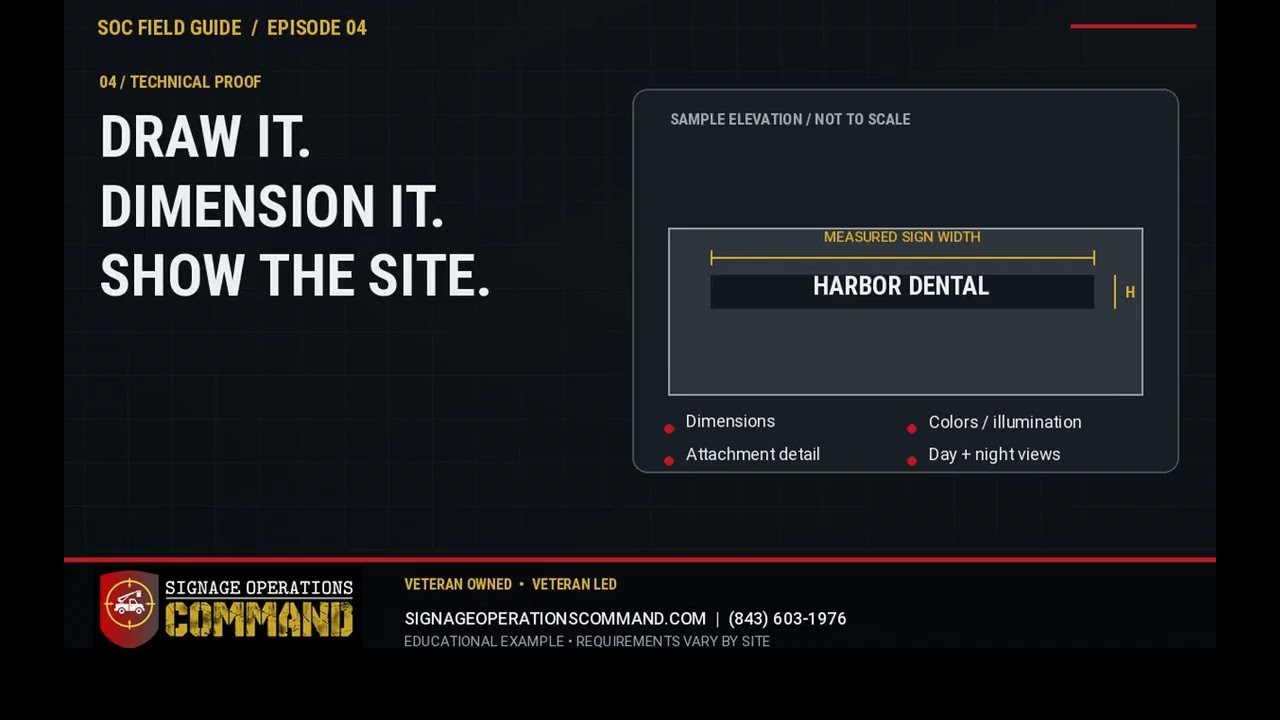
With the concept approved, permit drawings document what will be built and how it will be anchored, powered, and illuminated. The application is submitted to the local permitting office, where reviewers check it against sign code, structural requirements, and electrical standards.
Review cycles vary by jurisdiction. Complete, accurate drawings move through review faster; gaps and ambiguities generate comments, resubmittals, and delays.
Fabrication and Installation Planning
Once permitting is underway or approved, fabrication can be scheduled. Coordinating the fabrication timeline with installer availability, equipment access, and any electrical or general-contractor needs keeps the project from sitting finished-but-uninstalled.
This is the phase where a coordinated partner earns their keep: sequencing fabrication, freight, crane or bucket-truck access, and licensed electrical work is a logistics exercise as much as a construction one.
Installation, Inspection, and Closeout
Installation day is the visible step, but it isn't the last one. Depending on the jurisdiction and scope, final inspections, utility connections, and closeout documentation complete the project.
A well-run closeout leaves you with a sign that's operating correctly, paperwork that matches what was built, and a clear record for future maintenance or warranty needs.
Key Takeaways
- ✓Site Survey and Local Sign Code
- ✓Property Approval and Permit Drawings
- ✓Application Submission and Permit Review
- ✓Sign Fabrication and Installation Planning
- ✓Sign Installation and Final Closeout
Captions and a full transcript are available on YouTube — open this episode on YouTube and select "Show transcript."
Frequently Asked Questions
How long does the business sign permit process take?
It varies by jurisdiction and project complexity. Simple storefront signs in straightforward jurisdictions can move quickly, while engineered signs, variance requests, or historic-district reviews add time. The ten steps in this episode are the sequence every project follows; the calendar depends on your local office and how complete your drawings are.
Do I need a permit for every type of business sign?
Most permanent exterior signage — including many storefront, monument, and illuminated signs — requires a permit. Temporary banners, some interior signs, and routine maintenance may not. Your local sign code makes the final call, which is why confirming requirements for your specific address is an early step in the process.
Can SOC handle the permit process for me?
Yes. SOC coordinates site surveys, permit drawings, application submission, and reviewer comments as part of full-service sign projects, and supports nationwide installation once the sign is approved for production.
Related Services
Chapters
- 0:00Why Your Business Sign Needs a Plan
- 0:20Site Survey and Local Sign Code
- 0:44Property Approval and Permit Drawings
- 1:09Application Submission and Permit Review
- 1:34Sign Fabrication and Installation Planning
- 1:58Sign Installation and Final Closeout
- 2:21Meet Your Nationwide Signage Partner
Need Sign Help?
SOC coordinates permitting, fabrication, installation, and national sign programs.
Prefer to read? The Signs Matter blog covers the same topics in depth.
Request a Quote(843) 603-1976
Need Professional Signage Support?
Whether you need signage design, engineering, permitting, fabrication, installation, maintenance, or nationwide signage program management, Signage Operations Command is ready to help.
One Mission. One Command. All 50 States.