
About This Episode
Sign permit rejected? Learn five common reasons a commercial sign permit comes back with review comments — and what to check before you resubmit. Signage Operations Command's SOC Field Guide explains how sign code, property approval, structural drawings, electrical requirements, and contractor details affect the permitting process.
A permit rejection doesn't mean your sign is dead — it means something in the application didn't line up with what the reviewer needed to see. In this episode, SOC walks through the five checks that catch the most common reasons commercial sign permits come back with comments, so your resubmittal clears review instead of bouncing again.
Going Deeper
Rejection Is a Detour, Not a Dead End
Permit reviewers aren't looking for reasons to deny signage — they're looking for a complete, code-compliant picture of what will be built, where, and how. When an application comes back with comments, it usually means one of those elements was missing, unclear, or contradicted something on file.
Episode 2 of the SOC Field Guide covers the five checks to run before you resubmit. Working them in order turns a frustrating review cycle into a predictable checklist.
Check Size and Location Against Local Sign Code
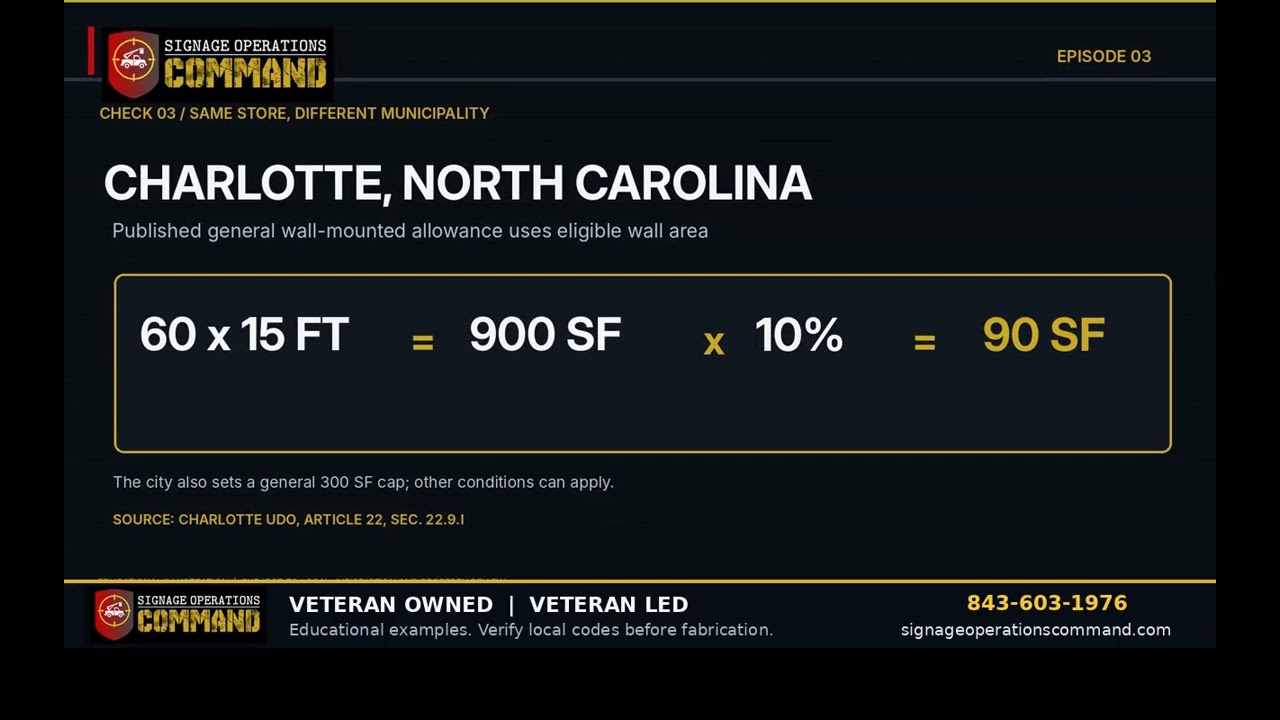
The first thing most reviewers verify is whether the sign as drawn is allowed at that address: total sign area, height, setbacks, and whether the proposed location is even an eligible wall or zone for signage. If the design exceeds the allowed area or sits in a restricted location, no amount of paperwork detail will fix it — the design itself has to change.
This is why confirming the allowed sign area for your specific address before finalizing a design saves entire review cycles.
Confirm Property Owner Approval
Applications on leased or managed properties need the property owner's sign-off. If that approval is missing, outdated, or doesn't match what's drawn, the reviewer has no way to reconcile the application with the property's rights.
Keep the approval current and consistent with the final design — including any changes made during design development.
Show How the Sign Stays Put
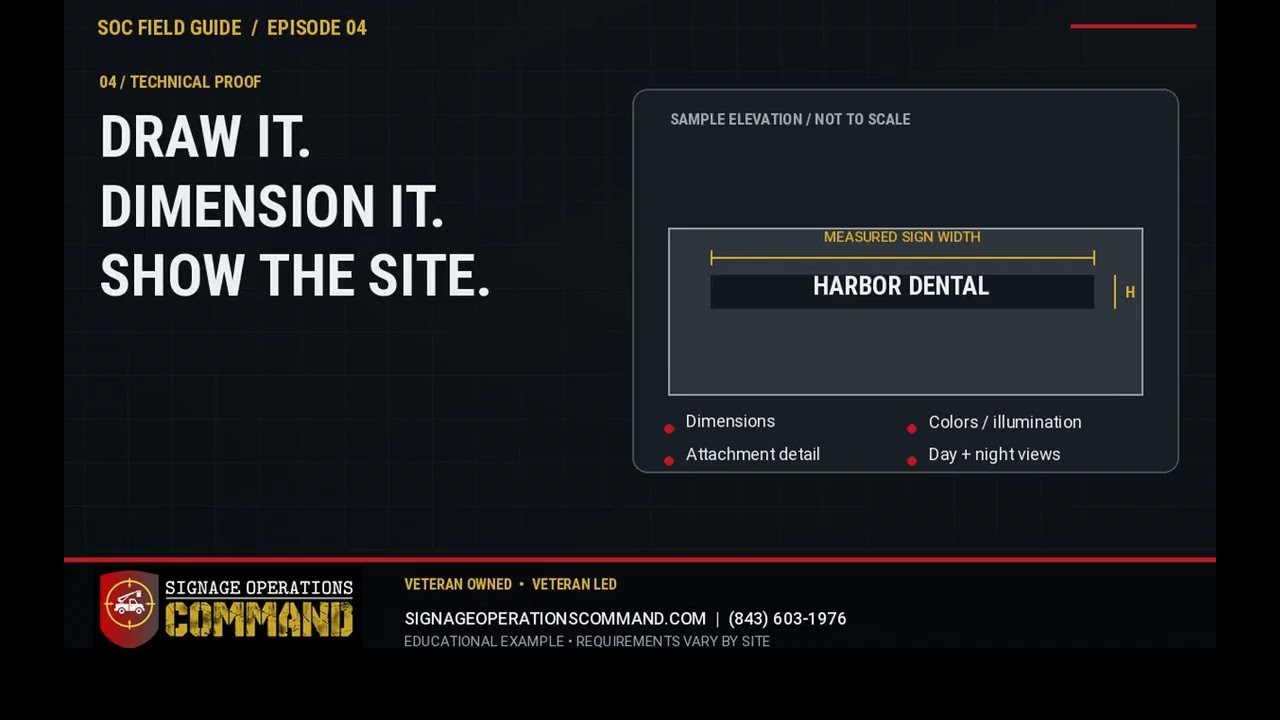
Reviewers evaluate structure, not just appearance. Permit drawings need to demonstrate how the sign attaches to the building or ground: anchorage, structural supports, and — for larger signs — engineering that shows the assembly handles wind and structural loads for that location.
A sign that looks great but can't show how it stays attached is one of the most reliable ways to earn review comments.
Plan the Power and Electrical Review
Illuminated signs bring electrical requirements into the review. That can include how power reaches the sign, the electrical details shown on the drawings, and whether a licensed electrician is part of the installation scope.
Leaving electrical detail out of the drawing set is a common gap that surfaces late in review, when it costs the most time.
Verify the Team and Address Every Comment
Finally, reviewers check who's doing the work. Contractor licensing, the party of record, and complete contact details all need to line up. And when comments do come back, the fastest path to approval is addressing every one of them explicitly in the resubmittal — not just the ones that seem important.
A complete, point-by-point response tells the reviewer you took the review seriously, and it's the difference between one more cycle and two.
Key Takeaways
- ✓Check the Size and Location
- ✓Get Property Approval
- ✓Show How the Sign Stays Put
- ✓Plan the Power and Electrical Review
- ✓Verify the Team and Address Review Comments
Captions and a full transcript are available on YouTube — open this episode on YouTube and select "Show transcript."
Frequently Asked Questions
What's the most common reason a sign permit gets rejected?
Incomplete or inconsistent drawings — especially around size and location versus the local sign code, missing property approval, or missing structural and electrical detail. The five checks in this episode cover the categories reviewers flag most often.
Can I fix a rejected permit myself, or do I need help?
Simple rejections — a missing signature or an unclear detail — can sometimes be corrected directly. Rejections that involve sign code limits, structural engineering, or electrical design usually go faster with a partner who produces compliant drawings and knows what the reviewer needs to see.
Does a rejection restart the whole review timeline?
Often, yes — resubmittals typically go to the back of the review queue. That's why running the five checks before resubmitting matters: a complete resubmittal is far more likely to clear in a single cycle.
Related Services
Chapters
- 0:00Why Was My Sign Permit Rejected?
- 0:23Check the Size and Location
- 0:48Get Property Approval
- 1:16Show How the Sign Stays Put
- 1:40Plan the Power and Electrical Review
- 2:05Verify the Team and Address Review Comments
- 2:35Your Sign. Our Mission.
Need Sign Help?
SOC coordinates permitting, fabrication, installation, and national sign programs.
Prefer to read? The Signs Matter blog covers the same topics in depth.
Request a Quote(843) 603-1976
Need Professional Signage Support?
Whether you need signage design, engineering, permitting, fabrication, installation, maintenance, or nationwide signage program management, Signage Operations Command is ready to help.
One Mission. One Command. All 50 States.